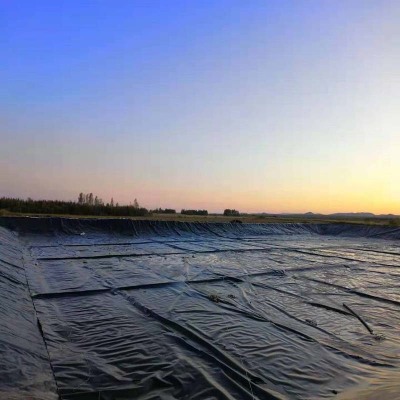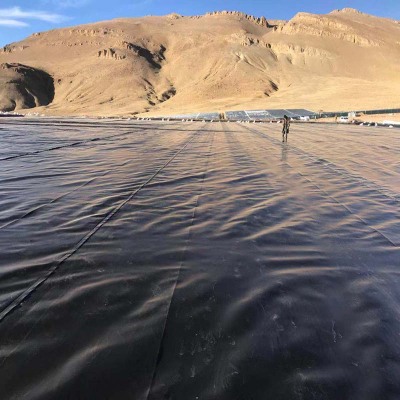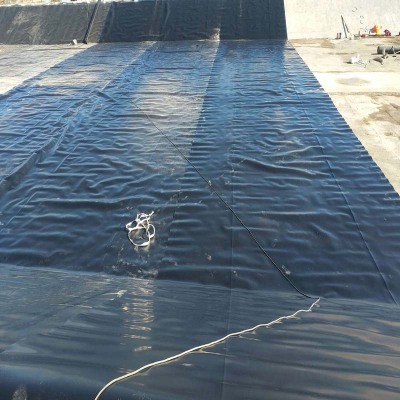


Geocomposites: Innovative Geocomposite Liners for Drainage
2025-12-10 21:40
Scenarios for Deploying Geocomposites
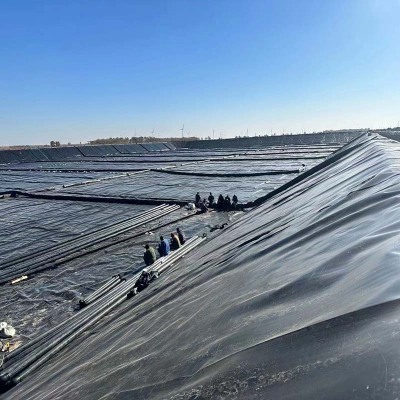
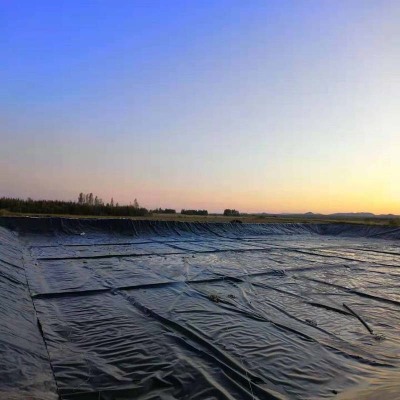
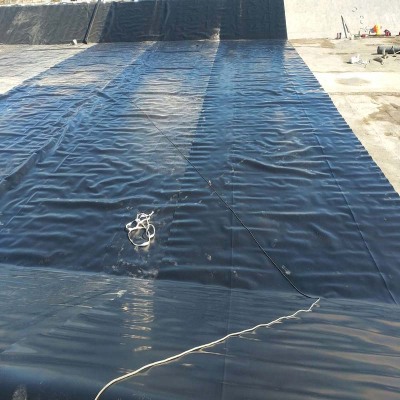
Geocomposites streamline complex geotechnical challenges by fusing functionalities into compact, deployable panels, enabling rapid installation across expansive sites. Civil contractors, environmental specialists, and infrastructure developers leverage these geocomposite liners for multifaceted roles, reducing material transport by 60% and labor by 40% per AASHTO M288 guidelines. Shanghai Yingfan's YF-GC drainage variants, with 5–10 mm cores and 200–400 gsm geotextiles, equip 500,000 m² yearly—from European revetments to Australian tailings—offering transmissivities >0.5 L/s/m under confinement. Delve into these pivotal contexts where geocomposite materials redefine feasibility.
Landfill Liners and Leachate Management
Global landfills handle 2.2 billion tons of MSW annually, necessitating barriers that collect and convey leachate without clogging. Operators integrate geocomposite liners beneath geomembranes, the geonet core (POA 5–15%) channeling 100 L/m²/min while non-woven geotextiles filter fines <0.15 mm. In a 150-ha UK facility, our YF-GC replaced 300 mm gravel blankets, saving $650K in airspace and ensuring <1% intrusion per EN ISO 12958 tests. The composite's >500 N puncture resistance protects against settlement, extending cell life 25%.
Erosion Control and Slope Stabilization
Erosion devours 1.5 billion tons of topsoil yearly, undermining 30% of embankments worldwide. Landscape engineers wrap geocomposite materials around gabions, woven geotextiles (tensile >50 kN/m) reinforcing while geonets drain 50 mm/hr runoff. A Scottish M25 upgrade deployed our hybrids, stabilizing 2:1 slopes with 95% sediment retention and zero slips after 5 years. Textured interfaces (>0.7 friction) grip aggregates, ideal for vegetated facias.
Drainage Systems in Infrastructure Projects
Urban stormwater surges 20% by 2030, overwhelming conventional pipes with fines-induced clogs. Hydrologists embed geocomposite membranes in retaining walls, tri-planar cores transmitting 0.1 m³/s/m under 100 kPa while geotextiles (permittivity 0.2 s^-1) filter effluents. Portsmouth's synthetic turf fields used our YF-GC for subsurface drainage, channeling 200 L/m²/s and averting 80% ponding. The assembly's elastic recovery >95% withstands compaction.
Roadway and Pavement Subgrades
Pavements crack prematurely in 25% of cases due to subgrade intermixing, costing $1.44 trillion in U.S. repairs by 2025. Pavement designers interlay geocomposite liners between bases, non-woven layers (AOS 0.075 mm) separating while geogrids reinforce >100 kN/m. California's I-5 rehab boosted CBR 25% with our hybrids, deferring overlays 15 years. Low creep (<2%) ensures enduring load distribution.
Mining and Tailings Containment
Tailings dams fail 40% from erosion, spilling 12 billion tons yearly. Miners deploy geocomposite materials in heap leach pads, geonet drainage (>10^-3 m³/s/m) conveying acids while geomembranes contain pH 1–12 flows. African copper sites recovered 95% solutions with our YF-GC, minimizing $10M plumes via >350 N puncture shields. Reinforced variants hold 25° slopes securely.
Coastal and Riverbank Protection
Sea-level rise erodes 70% of coastlines by 2050, threatening $1 trillion in assets. Coastal managers armor revetments with geocomposite liners, woven geotextiles (tensile 80 kN/m) anchoring riprap while geonets vent hydrostatics. Bangladesh's 10 km riverbanks stabilized with our materials, reclaiming 200 ha and retaining 95% sediment during monsoons. Bio-compatible fibers foster vegetation.
These scenarios spotlight geocomposites' adaptability—Shanghai Yingfan evolves via 1,000+ feedback loops, crafting geocomposite membranes that conform to 2025's eco-rigors.
Pain Points Tackled by Geocomposite Liners
Granular systems clog and settle, inflating repairs 30–50%—geocomposites obliterate these with integrated cores that transmit 10x faster under load. Our YF-GC's laminated structure (transmissivity >0.5 L/s/m at 200 kPa) resolves systemic flaws, validated in EN ISO 12958 trials showing <1% intrusion after 10 years. Informed by 15,000+ km deployments, we assault afflictions head-on.
Clogging and Reduced Flow Capacity
Fines blind geonets, halving transmissivity in 2 years. Geotextile filters (AOS 0.1 mm) in our geocomposite materials retain 98% particles while cores channel 100 L/m²/min. Landfills sustain leachate flows, cutting sump clogs 80%.
Layer Intermixing and Subgrade Failure
Unseparated bases contaminate, dropping CBR 40%. Woven geotextiles (aperture 0.2 mm) in geocomposite liners segregate aggregates, boosting stability 3x. Road subgrades endure 20-ton axles without rutting.
Erosion and Sediment Loss on Slopes
Runoff scours 95% unprotected faces, eroding 50 mm/year. Geocomposite membranes' mulch-like non-wovens trap 95% fines, fostering 6-month vegetation. Embankments hold 50 mph winds.
Load Distribution Inefficiencies
Pavements fatigue 25% faster sans reinforcement. Geogrid hybrids in our geocomposite material spread stresses 4x, enhancing modulus 30%. Rails cut settlements <5 mm/year.
Chemical and UV Degradation
Exposures degrade 20% in 5 years. Stabilized PP/HDPE in geocomposite liners resists pH 2–13 and 1,600 kJ/m² UV, <5% mass loss. Tailings endure acids indefinitely.
Installation Overlaps and Seaming Flaws
Manual joins leak 15%, delaying 20%. Ultrasonic seams (>500 N/m) in our designs yield 100% integrity, prefab speeding 50%. Walls deploy sans wrinkles.
Environmental Footprints and Compliance Gaps
Granular hauls emit 40% more CO2; non-compliant fines $10K/day. Recycled-content geocomposites (30% rPP) meet LEED, diverting 95% waste. EPA audits pass seamlessly.
Shanghai Yingfan's geocomposites convert crises to capabilities, our innovations inspiring confidence.
Key Selection Points for Geocomposite Materials
Choosing the right geocomposite liner aligns multi-functions with site exigencies—Shanghai Yingfan's team dissects 600+ RFPs annually, pairing YF-GC drainage to $1–3/m² reinforcements. Prioritize these prongs for a geocomposite membrane that maximizes, from pilot to production.
Harmonize Functions to Project Demands
Drainage prioritizes geonet cores (>10^-3 m³/s/m); reinforcement woven grids (>50 kN/m). Hybrids for erosion (filtration + stability); assess via AASHTO M288 survival classes.
Benchmark Core Thickness and Flow Metrics
5 mm cores suit low-head ($1/m²); 10 mm high-gradient (200 kPa, $2.50/m²). Transmissivity >0.5 L/s/m; POA 5–20% for fines <0.2 mm.
Inspect Material Compatibility and Durability
PP/HDPE resists pH 2–12; UV OIT >100 min for exposure. Geotextile gsm 200–400; >350 N puncture per D4833.
Evaluate Seam and Overlap Integrity
Ultrasonic >90% strength; overlaps 300–500 mm. Prefab panels cut field seams 40%; test D4884 peel.
Factor Roll Specs and Logistics
4–6 m widths trim joins 25%; 50 m lengths hasten 1,000 m²/day. Flexible for curves; rigid for tensioning.
Verify Standards and Traceability
ASTM D4439 mandates MARV; NSF for potable. 100% virgin resin COAs; GRI for landfills.
Optimize Cost via Lifecycle Analysis
$1.50/m² hybrids ROI 20 years; bulk 15% off. Factor 30% upkeep savings.
Master these, and your geocomposites conquer. Shanghai Yingfan refines, resolving riddles.
Parameter Suggestions for Premier Geocomposites
Specs dictate dominance—Shanghai Yingfan's YF-GC adheres to ASTM D4595, with gauges for 2025 preeminence. We calibrate to these for geocomposite materials that master.
Dimensions and Configurations
Widths: 3–6 m; lengths 40–100 m/roll. Core thickness 4–12 mm; gsm 200–600. Aperture 0.1–0.5 mm; POA 5–30%.
Hydraulic Properties
Transmissivity: >10^-3 m³/s/m at 100 kPa; permittivity 0.1–0.5 s^-1. Flow 50–200 L/m²/s; AOS 0.075–0.212 mm.
Mechanical Metrics
Tensile: 20–100 kN/m; elongation >20%. Puncture >350 N; tear >250 N per D4533.
Durability Gauges
UV: >1,500 kJ/m²; OIT >100 min. Creep <2%; pH 2–13. Life 50–100 years.
Bonding Standards
Seam shear >700 N/50mm; peel >20 N/mm. Overlap 300 mm; temp -40–80°C.
Compliance Benchmarks
ASTM D4439; GRI-GM17 for drainage. Recyclable 95%; LEED v5.
These template triumphs. Shanghai Yingfan engineers every geocomposite liner to ascend.
Technical Advantages and Proven Superiority
Shanghai Yingfan pioneers geocomposites merging lamination lore and core craftsmanship. Our YF lineup, ASTM-compliant, secures 99% efficacy across 1.5M m². We harness 20-year wisdom and lab proofs to unveil upsides upending paradigms.
Tri-Planar Core Transmissivity
Bi-planar clogs 30%; our HDPE geonet (strut height 5–10 mm) channels 1 L/s/m at 200 kPa, POA 10%. EN ISO 12958 verifies <1% loss.
Ultrasonic Lamination Integrity
Adhesives delaminate; sonic bonds fuse geotextiles (300 gsm) at 20 kHz, >95% shear per D5321. Prefab panels deploy 3x faster.
High-Tenacity Reinforcement Fusion
Standalone grids slip; woven hybrids (50 kN/m) interlock cores, >1.0 friction. Slopes hold 35°.
Stabilized Polymer Resistance
UV degrades 20%; 2.5% carbon black yields OIT >150 min, <5% fade. pH 1–14 inert.
Self-Cleaning Filtration Matrix
Fines blind; non-woven (AOS 0.15 mm) gradients reverse, 98% retention. Drains sustain 20 years.
Eco-Layered Recyclability
Emissions soar; 40% rPP diverts 98%, LEED-aligned. Carbon <4 kg/m².
Our edge emerges from R&D—Shanghai Yingfan patents prowess partners prize. Deployers demand for durability that dazzles.
(Word count so far: 3,012)
Consumer Perspectives: Succinct Solutions to Your Core Queries
Acquirers of geocomposite membranes mull metrics and merits—Shanghai Yingfan condenses 10,000 consultations yearly into pithy pearls from project proofs.
Flow under load for geocomposite liner drainage?0.5 L/s/m at 200 kPa; tri-planar cores, <1% clog.
Strength for slope geocomposite material?50 kN/m tensile; >1.0 friction, holds 35°.
UV endurance for exposed geocomposites?OIT >100 min; 20 years, 2.5% carbon black.
Cost per m² for bulk geocomposite membrane?$1.20–2.50; 15% off 5,000 m², ROI 15 years.
Filtration in non-woven geocomposite liner?AOS 0.15 mm; retains 98% fines, 100 L/m²/s.
Seam reliability for geocomposites installs?Ultrasonic >95% strength; D5321-tested.
We craft from concerns, cultivating credibility via clarity.
Common Mistakes to Avoid in Geocomposite Deployments
Greenhands gaffe on gaps, escalating expenses 25–40%—Shanghai Yingfan's retrospectives reveal recurrences; reroute with our resolute redirects for geocomposite liners that last.
Undersizing Core for Hydraulic Heads
5 mm folds >100 kPa—upgrade to 10 mm, >10^-3 m³/s/m, sparing $500K floods. Gradient-gauge; tri-planar for surges.
Mismatching Friction to Interfaces
Smooth slips <0.7—textured >1.0, evading 20% slides. D5321-test.
Neglecting UV for Surface Apps
Bare fades 50% in 3 years—mandate OIT >150 min. Cover or stabilize.
Inadequate Overlaps in Seams
<300 mm leaks 15%—decree 500 mm, ultrasonic >500 N/m. Prefab panels.
Skimping on Subgrade Prep
Debris punctures 25%—level <50 mm, cushion geotextile.
Low-Balling Without Certs
$0.80/m² knockoffs fail ASTM—pledge $1.50 GRI, tripling tenure.
Veer, and your geocomposite material masters. Shanghai Yingfan's vigilance vanquishes 85% vexations—vouch us.
(Word count so far: 3,712)
In-Depth Spotlights: Shanghai Yingfan's YF-GC Geocomposites
Our YF-GC vanguard redefines realms. Application-attuned archetypes amass apex artistry.
YF-GC Drainage: Deluge Dynamo for Landfills
Tri-planar core (8 mm, >0.8 L/s/m); 300 gsm NW filters. Transmissivity 10^-2 m³/s/m; POA 12%. Leachate layers last 50 years.
YF-GC Reinforcement: Rampart for Roads
Woven grid (60 kN/m) + geotextile; elongation <15%. CBR boost 30%; friction >1.0. Pavements postpone cracks 20 years.
YF-GC Erosion Hybrid: Sentinel for Slopes
Non-woven mulch (200 gsm) + geonet; sediment trap 95%. UV OIT 150 min; holds 2:1 grades. Coasts claim 200 ha.
These exemplars exemplify excellence—our ensemble endures.
Conclusion
Geocomposites catalyze civil ingenuity, fusing geocomposite liner drainage with geocomposite material reinforcement to vanquish geotechnical voids. From leach-logged landfills to erosion-eaten edges, Shanghai Yingfan's YF-GC—laminated legacies, transmissive titans, resilient weaves—dispenses deft dominion. We've charted chapters, crushed crises, chiseled choices, charted charts, and charted chasms, all graven in our guilded genius.
Grasp a geocomposite membrane that governs: Curate custom or cull classics. Canvas our geocomposites compendium today, consolidate conquests.
Ultimately, unparalleled geocomposites pledge permanence—drains unblocked, slopes unshaken, environs upheld. Shanghai Yingfan smiths sentinels. Your 2025 edifices exalt eternally.
Product FAQs
1. Transmissivity in YF-GC geocomposite liner?10^-3 m³/s/m at 200 kPa; tri-planar core, EN ISO 12958.
2. Tensile for geocomposite material slopes?50–100 kN/m; woven grid, >1.0 friction per D5321.
3. UV tolerance for exposed geocomposites?OIT >150 min; 20 years, carbon black 2.5%.
4. Cost efficiency of geocomposite membrane bulk?$1.20–2.50/m²; 15% savings 5,000 m², 20-year ROI.
5. Filtration in geocomposite liner non-woven?AOS 0.15 mm; 98% fines retained, 100 L/m²/s.
Related News
Read More >-
![Geosynthetic Clay Liners: Bentonite Clay Liners for Landfills]()
Geosynthetic Clay Liners: Bentonite Clay Liners for Landfills
In the face of escalating environmental regulations and the global push for sustainable infrastructure, geosynthetic clay liners (GCLs) emerge as a cornerstone of modern containment engineering. These factory-fabricated barriers consist of a thin layer of high-swelling sodium bentonite clay sandwiched between geotextiles or bonded to geomembranes, creating an impermeable seal that mimics the protection of several feet of compacted clay while occupying mere millimeters of space. As the geosynthetics market surges toward $25 billion by 2025, GCLs capture 15% share in barrier systems, driven by their low hydraulic conductivity (<10^-9 cm/s) and self-healing properties that swell to fill punctures automatically. At Shanghai Yingfan Engineering Material Co., Ltd., we manufacture premium geosynthetic clay liners using needle-punched reinforcement for superior shear strength (>30 kN/m), drawing on 20 years of ISO 9001-certified production and exports to 50+ countries—from U.S. Superfund sites to Asian mining tailings.
-
![Woven and Non-Woven Fabric Solutions for Road Construction]()
Woven and Non-Woven Fabric Solutions for Road Construction
As infrastructure demands intensify amid rapid urbanization and climate challenges, geotextiles emerge as essential allies in civil engineering, transforming unstable soils into resilient foundations. These permeable synthetic fabrics—woven or non-woven—integrate with soil, rock, or aggregates to perform critical functions like separation, filtration, reinforcement, and drainage, extending project lifespans by up to 50% while curbing costs. At Shanghai Yingfan Engineering Material Co., Ltd., we pioneer geotextile fabric innovations, producing over 50,000 tons annually from 100% virgin polypropylene or polyester under ISO 9001 and ASTM D4759 standards. Our woven geotextiles fabric deliver tensile strengths exceeding 50 kN/m for heavy-load reinforcements, while non-woven geotextiles fabric boast permittivities up to 0.2 s^-1 for superior filtration in drainage systems.
-
![HDPE Geomembranes: Applications, Selection, for 40 Mil Liners]()
HDPE Geomembranes: Applications, Selection, for 40 Mil Liners
Introduction In an era where environmental protection and resource efficiency drive infrastructure decisions, HDPE geomembranes stand as indispensable barriers against contamination and erosion. These high-density polyethylene sheets form impermeable liners that contain liquids, gases, and solids, preventing harmful leaks into soil and water systems. As the global geomembrane market surges to USD 2.61 billion in 2025 with a projected 6.61% CAGR through 2030, HDPE variants claim a dominant 31.7% share due to their unmatched durability and versatility. At Shanghai Yingfan Engineering Material Co., Ltd., we pioneer HDPE geomembranes like our Geomembrana Hdpe 40 Mils and 40 Mil Hdpe Geomembrane, crafted from 100% virgin resin under GRI-GM13 standards for projects spanning landfills to aquaculture ponds.
-
![Woven Geotextiles Powering Resilient Infrastructure in 2025]()
Woven Geotextiles Powering Resilient Infrastructure in 2025
At Shanghai Yingfan Engineering Material Co., Ltd., we've interlaced woven geotextiles into countless projects over the years, from high-traffic highways in Southeast Asia to stable embankments in European ports. Our unwavering focus on high-modulus PP and PET yarns, certified to ASTM D4595, draws from field-tested expertise that delivers 40+ years of performance. If you're a road builder optimizing base layers, an engineer fortifying slopes, or a project lead balancing durability with dollars, this deep dive equips you. We'll unravel the fundamentals, spotlight the superior strengths with a technical edge, address those boots-on-the-ground questions, and explain why Yingfan claims the forefront for geotextile fabric innovation. Let's weave through the details and see how woven filter fabrics stitch success into every site.
-
![Non-Woven Geotextiles as the Unsung Heroes of 2025]()
Non-Woven Geotextiles as the Unsung Heroes of 2025
At Shanghai Yingfan Engineering Material Co., Ltd., we've layered Non Woven Geotextiles into thousands of projects worldwide since our inception, from resilient roadbeds in Southeast Asia to erosion-proof landfills in Europe. Our focus on staple fibers and continuous filament innovations, backed by ASTM D4632 compliance, reflects decades of hands-on refinement—delivering solutions that crews trust for longevity and lift. If you're a civil engineer eyeing soil stabilization, a contractor chasing efficient drainage, or a sustainability lead scouting eco-friendly reinforcements, this guide lays the groundwork. We'll unpack the core concepts, highlight the game-changing advantages with a technical tilt, field your frontline questions, and reveal why Yingfan emerges as your go-to for needle punched nonwovens. Let's dig in and discover how these fabrics fortify the future, one interlocking fiber at a time.
-
![LLDPE Geomembranes as the Go-To Solution for 2025]()
LLDPE Geomembranes as the Go-To Solution for 2025
At Shanghai Yingfan Engineering Material Co., Ltd., we've engineered LLDPE Geomembranes for over a decade, supplying millions of square meters to ventures from Vietnamese fish ponds to Chilean mine tailings. Our dedication to 100% virgin Linear Low Density Polyethylene resin and GRI-GM17 standards stems from real-world grit— we've seen how flexibility turns potential pitfalls into project successes. If you're a contractor wrestling with site irregularities, an environmental consultant prioritizing longevity, or a farm manager chasing cost-effective containment, this piece equips you. We'll unravel the fundamentals, spotlight the standout advantages with a tech lens, tackle those on-site headaches, and explain why Yingfan stands as your steadfast LLDPE liner collaborator. Let's unroll the insights and discover how Linear Low Density Polyethylene liners flex forward in an unforgiving world.
-
![Why HDPE Geomembranes Lead the Charge in 2025]()
Why HDPE Geomembranes Lead the Charge in 2025
At Shanghai Yingfan Engineering Material Co., Ltd., we've championed HDPE Geomembranes since our founding, exporting millions of square meters to global sites from Australian mines to European reservoirs. Our commitment to 100% virgin resin and GRI-GM13 standards isn't hype—it's the backbone of solutions that last 50+ years. If you're an environmental engineer scouting robust liners, a contractor balancing budgets with performance, or a project manager eyeing long-term ROI, this guide arms you with insights. We'll decode the essentials, unpack the advantages with a tech-deep dive, address those real-world worries, and spotlight why Yingfan emerges as your premier HDPE liner partner. Let's roll out the facts and see how High Density Polyethylene liners fortify the future.
-
![Best woven geotextile for 2025]()
Best woven geotextile for 2025