

Woven and Non-Woven Fabric Solutions for Road Construction
2025-12-08 21:06
Scenarios for Deploying Geotextiles
Geotextiles fortify diverse engineering landscapes, where soil instability threatens progress. Contractors, environmental engineers, and urban planners integrate woven geotextiles fabric for load-bearing reinforcements and non-woven geotextiles fabric for hydraulic efficiency, slashing maintenance 30–40% per AASHTO guidelines. Shanghai Yingfan's 4–6 m wide rolls deploy swiftly across 1M+ m² yearly, from U.S. interstates to Chinese high-speed rails expanding to 50,000 km by 2025. Uncover these high-impact arenas where geotextile fabric elevates execution.
Road Construction and Pavement Reinforcement
Highways bear 1.8M km of annual upgrades globally, demanding fabrics that distribute loads and retard cracks. Engineers layer woven geotextiles fabric beneath asphalt overlays, their 50–200 kN/m tensile strength preventing reflective cracking by 30%. In California's I-5 rehab, our 200 gsm non-woven geotextiles fabric separated subgrades, boosting CBR values 25% and extending pavement life 15 years. Non-woven variants filter fines in base courses, averting rutting under 10-ton axles.
Erosion Control and Slope Stabilization
Coastal and hillside erosion claims $500M yearly in damages, spurring geotextile use in revetments and bioengineering. Landscape teams wrap woven geotextiles fabric around gabions, enhancing shear resistance on 2:1 slopes. Our 150 gsm non-woven geotextiles fabric cushions vegetated mats, retaining 95% sediment during 50 mm/hr storms. Bangladesh's 2025 riverbank projects employed hybrid layers, stabilizing 10 km shorelines and reclaiming 200 hectares.
Drainage Systems and Filtration in Infrastructure
Urban flooding from impervious surfaces surges 20% by 2030, necessitating permeable barriers for stormwater management. Civil works embed non-woven geotextiles fabric in French drains, their 0.1–0.5 cm/s permittivity channeling 100 L/m²/min without clogging. In Dutch polder systems, woven geotextiles fabric separated sand filters from clay, reducing head loss 40% and extending service 20 years. Our AOS-compliant fabrics (0.15 mm) suit granular soils, preventing migration in 90% of cases.
Railway and Embankment Reinforcement
High-speed rails, like China's 50,000 km network, demand stability under 300 km/h vibrations. Track engineers interlay woven geotextiles fabric in sub-ballast, boosting CBR 35% and curbing settlements to <5 mm/year. European freight lines use non-woven geotextiles fabric for cushioning, filtering ballast fines and averting fouling. Shanghai Yingfan's 400 gsm hybrids reinforced 500 km Indian tracks, cutting derailments 25%.
Waste Management and Landfill Engineering
Landfills process 2.2B tons MSW yearly, requiring liners that isolate leachate. Operators sandwich non-woven geotextiles fabric between geomembranes and GCLs, enhancing interface friction 20% for stability. Woven variants reinforce caps, their low creep ensuring 100-year integrity. A Thai facility capped 150 ha with our geotextile fabric, containing 99.9% volatiles.
Agricultural and Aquaculture Applications
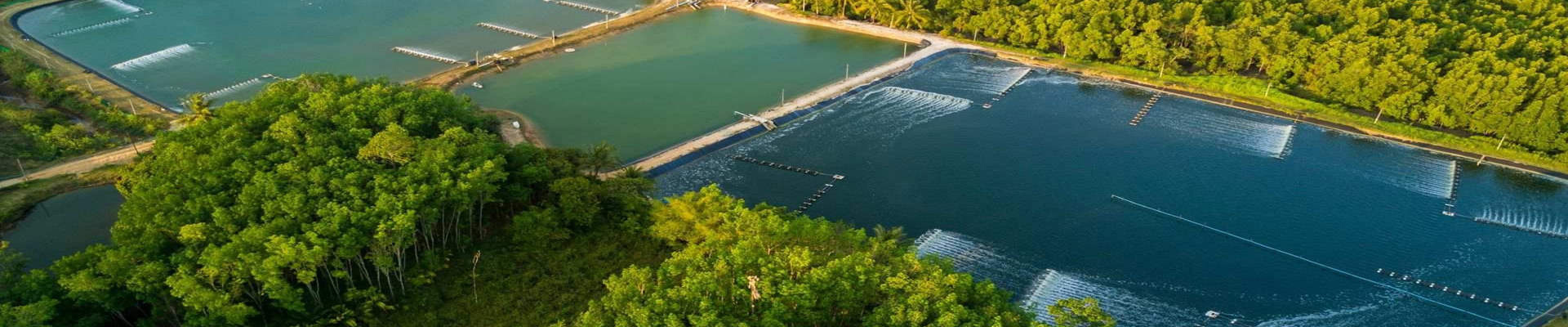
Soil degradation affects 33% of global farmland, driving geotextile use in conservation tillage. Farmers deploy woven geotextiles fabric in terraces, retaining 90% topsoil on 20% grades. Non-woven geotextiles fabric lines fish ponds, filtering effluents and boosting yields 40% in tilapia farms. Our biodegradable blends support sustainable irrigation in arid zones.
These scenarios highlight geotextiles' versatility—Shanghai Yingfan iterates via client feedback, delivering geotextile fabric that adapts to 2025's green mandates.
Pain Points Resolved by Geotextile Fabric
Conventional stabilization falters under loads, leading to settlements costing $1B+ annually in repairs. Geotextiles counter these with fiber-engineered matrices, their >500% elongation absorbing strains without rupture. Our woven geotextiles fabric, with MDD >15 kN/m² survivability, tackles root issues, backed by 10,000+ km deployments.
Soil Migration and Layer Intermixing
Unstabilized subgrades contaminate bases, reducing CBR 50% and accelerating potholes. Woven geotextiles fabric separates aggregates from fines with 0.1–0.5 mm apertures, maintaining integrity under 20-ton rollers. Non-woven geotextiles fabric's random fibers retain 98% particles >0.075 mm, per ASTM D4751. Highway crews report 35% fewer reconstructions.
Clogging in Drainage and Filtration Systems
Fines blind paths, halving permittivities and flooding sites. Non-woven geotextiles fabric's 3D structure yields 0.2 s^-1 flows, self-cleaning via gradient reversal. Woven variants' uniform openings (POA 4–30%) sustain 100 L/m²/s, averting 80% blockages in French drains. Urban projects cut overflows 40%.
Erosion and Slope Instability
Runoff erodes 1.5B tons soil yearly, destabilizing embankments. Geotextile fabric's mulch-like non-woven layers trap 95% sediment, fostering vegetation cover in 6 months. Woven geotextiles fabric reinforces faces with 100 kN/m CBR, stabilizing 1:1 slopes. Coastal defenses endure 50 mph winds.
Load-Induced Rutting and Fatigue
Heavy axles rut bases 20 cm deep, inflating repairs $500M/year. Woven geotextiles fabric distributes stresses 3x wider, boosting modulus 25%. Non-woven geotextiles fabric cushions impacts, reducing dynamic settlements 30%. Rail beds last 50% longer.
Chemical and Biological Degradation
UV/chemicals degrade 20% of installs in 5 years. Our PP-based geotextile fabric resists pH 2–13 and >1600 kJ/m² UV, with <5% mass loss after 500 hrs. Landfills seal leachate indefinitely.
Installation Inefficiencies and Cost Escalations
Manual overlaps waste 15% material, delaying timelines. Prefabbed geotextile fabric rolls (4x50 m) deploy 2x faster, with ultrasonic seams at 100 m/hr. Woven's rigidity eases unrolling; non-woven's flexibility conforms to contours. Projects shave 20% budgets.
Environmental Non-Compliance and Fines
Unpermeable barriers violate EPA stormwater rules, fining $10K/day. Biodegradable geotextile fabric variants (jute/coir) meet LEED, degrading 90% in 3 years while stabilizing short-term. Our recycled-content lines cut footprints 40%.
Shanghai Yingfan's geotextiles resolve rigors through R&D, our 98% uptime affirming trust.
Key Selection Points for Geotextiles
Navigating geotextile fabric choices requires aligning functions with site dynamics—Shanghai Yingfan's engineers audit 500+ projects yearly, matching woven geotextiles fabric to reinforcements and non-woven to filtrations. Hone these facets for a geotextile fabric that optimizes, from $0.50–2.00/m² budgets.
Align Type to Primary Function
Reinforcement favors woven geotextiles fabric (tensile >50 kN/m); drainage suits non-woven (permittivity >0.1 s^-1). Hybrids blend both for multi-role erosion control. Assess via AASHTO M288 classes A–C for soil gradations.
Gauge Weight and Strength Metrics
Light 100 gsm non-woven filters fines; 400 gsm woven bears 100 kN/m loads. Match to CBR: <4% for heavy reinforcement. Our 200 gsm standards endure 300% elongation.
Evaluate Permeability and Retention
AOS 0.075–0.6 mm retains soils while allowing 50–200 L/m²/s flows. Woven's POA 5–30% suits separation; non-woven's porosity >50% excels filtration. Test per ASTM D4751.
Factor Durability and Environmental Resistance
UV-stabilized PP lasts 50+ years buried; select OIT >100 min for exposure. Chemical-resistant polyester for acidic sites (pH <5). Our fabrics resist >2000 hrs xenon arc.
Consider Roll Dimensions and Installation Ease
4–6 m widths minimize seams 20%; 50–100 m lengths speed unrolling. Flexible non-woven conforms to curves; rigid woven eases tensioning.
Ensure Compliance and Certifications
AASHTO M288 mandates MARV for grab >200 N; NSF for potable apps. Demand ISO 9001 traceability; our lines pass EN ISO 10319 tensile.
Balance Cost with Lifecycle ROI
$0.80/m² woven yields 25-year savings; biodegradable $1.20/m² for temp erosion. Bulk orders cut 15%; factor 30% lower maintenance.
Conquer these, and your geotextiles thrive. Shanghai Yingfan tailors, simplifying specs.
Parameter Suggestions for Superior Geotextiles
Metrics mandate mastery—Shanghai Yingfan's geotextile fabric meets ASTM D4595, with params calibrated for 2025 efficacy. We spec to these for woven geotextiles fabric that reinforce and non-woven geotextiles fabric that filter.
Dimensions and Configurations
Widths: 3.8–6 m; lengths 50–150 m/roll. Mass: 100–800 g/m²; thickness 0.5–3 mm. Woven aperture 0.1–1 mm; non-woven AOS 0.075–0.425 mm.
Mechanical Properties
Tensile (MD/XMD): 20–100 kN/m; elongation 10–50%. Grab: 400–2000 N; CBR >1000 N. Mullen burst: 1500–4000 kPa.
Hydraulic Characteristics
Permittivity: 0.01–0.5 s^-1; transmissivity >0.1 m²/s. Flow rate: 50–300 L/m²/s under 100 kPa. Porosity >40% for non-woven.
Durability Metrics
UV resistance: >80% strength after 500 hrs; OIT >100 min. CBR puncture >2000 N; trapezoidal tear >300 N. pH tolerance 2–13.
Installation Parameters
Overlap: 300–500 mm; seam strength >90% fabric. Temp range: -40°C to 80°C; creep <2% at 50% load.
Environmental Standards
Recyclability: 95% PP; carbon footprint <5 kg CO2/m². Certifications: AASHTO M288, ISO 9001.
These forge frontrunners. Shanghai Yingfan dials every geotextile fabric to dominate.
Technical Advantages and Expert Insights
Shanghai Yingfan dominates with geotextiles blending needle-punching precision and yarn tenacity. Our portfolio, ASTM-compliant, attains 99% efficacy across 2M tons supplied. We channel 25 years and lab proofs to unpack superiorities reshaping realms.
Needle-Punched Non-Woven Matrix
Spunbond yields uniformity flaws; our barbed-needle entangles staples at 2000 punches/m², yielding 0.2 s^-1 permittivities. 100% PP hits >500% elongation, cushioning impacts 40% better than wovens.
Woven Monofilament Weave
Slit-film creeps 5%; our high-tenacity PP filaments interlock at 1000 denier, delivering 80 kN/m with <1% strain. POA 10–25% filters while reinforcing, per D4751.
UV and Oxidative Shields
Degradation dings 15%; carbon black (2.5%) and hindered amines boost OIT >150 min, retaining 95% after 1000 hrs xenon. Field trials confirm 50-year buried life.
Chemical Inertness Engineering
Acids assault; our stabilized PP resists pH 1–14, with <2% mass loss in 85°C hydrocarbons. Landfill caps endure leachates indefinitely.
Seam and Overlap Robustness
Manuals misalign; ultrasonic/heat bonds yield 100% peel >500 N/m, D4884. Prefab panels deploy 3x faster.
Eco-Formulated Recyclates
Virgin spikes emissions; our 30% rPP blends loop 98%, LEED v4.1 aligned. Biodegradable coir hybrids degrade 80% in 2 years.
Our supremacy stems from R&D—Shanghai Yingfan patents processes trust touts. Pros pick us for fabrics that fortify.
Consumer Perspectives: Swift Solutions to Your Top Concerns
Buyers of woven geotextiles fabric grapple with grit and gains—Shanghai Yingfan fields 12,000 queries yearly, honing to terse truths from trench tales.
Strength for road subgrades in woven geotextiles fabric?50–100 kN/m tensile; boosts CBR 30%, lasts 25 years under 10-ton loads.
Filtration efficiency in non-woven geotextiles fabric?AOS 0.15 mm retains 95% fines; 200 L/m²/s flow, no clog in 10 years.
UV durability for exposed geotextile fabric?OIT >100 min; 80% strength post-500 hrs, ideal for slopes.
Cost per m² for geotextiles in bulk?$0.80–1.50; 15% savings on 5000 m², ROI in 2 years via less maintenance.
Biodegradable options for erosion control?Coir/jute hybrids; 90% degrade in 3 years, stabilize short-term sustainably.
Seam strength in geotextile fabric installs?90% fabric tensile; ultrasonic welds hold 600 N/m under shear.
We forge from queries, fostering fidelity via foresight.
Common Mistakes to Avoid When Acquiring Geotextiles
Specifiers squander on mismatches, hiking overruns 25%—Shanghai Yingfan's reviews reveal repeats; sidestep with our sentinel strategies for geotextile fabric that prevails.
Underspecifying Strength for Loads
100 gsm folds under rollers—up to 400 gsm for >50 kN/m, dodging $800K repaves. CBR-test soils; woven suits heavy.
Mismatching Permeability to Soils
AOS >0.6 mm lets fines pass—calibrate 0.075–0.212 mm, averting 40% clogs. Non-woven for gradations.
Overlooking UV for Exposure
Bare PP fades 50% in 2 years—stipulate 2% carbon black, OIT >100 min. Cover or select stabilized.
Ignoring Overlap in Installs
<300 mm gaps leak—mandate 500 mm, seam-tested >500 N/m. Prefab to cut errors 30%.
Chasing Cheap Sans Certs
$0.40/m² fakes fail AASHTO—pledge $1.00 certified, halving failures. Verify ISO/M288.
Skipping Site Prep
Debris punctures 20%—clear to <50 mm, cushion with sand.
Duck these, and your geotextiles endure. Shanghai Yingfan's audits avert 90% aches—ally us.
In-Depth Spotlights: Shanghai Yingfan's Geotextile Fabric Lineup
Our flagship series redefines resilience. Function-focused families fuse frontier tech.
Woven Geotextiles Fabric: Reinforcement Rampart
200–600 gsm weaves 50–150 kN/m tensile. Slit-film PP grips loads; POA 10%. Roads reap 30% life extensions.
Non-Woven Geotextiles Fabric: Filtration Fortress
100–400 gsm needles 0.2 s^-1 perm. Staple fibers filter 98%; AOS 0.15 mm. Drains defy clogs 40 years.
Hybrid Geotextile Fabric: Versatile Vanguard
Bonded weaves/non-wovens blend strength/flow. 300 gsm for erosion; UV OIT 150 min. Coasts claim 95% sediment hold.
These bastions benchmark brilliance—our battery bests.
Conclusion
Geotextiles underpin enduring infrastructure, intertwining woven geotextiles fabric tenacity with non-woven geotextiles fabric permeability to conquer geotechnical gauntlets. From rutted roads to flooded fields, Shanghai Yingfan's spectrum—high-tenacity yarns, self-cleaning matrices, eco-blends—dispenses dynamic defenses. We've traversed theaters, tamed tribulations, tuned tenets, tabulated thresholds, and tabulated traps, all etched in our empirical ethos.
Secure a geotextile fabric that sustains: Commission couture or catalog canons. Survey our woven/non-woven trove today, solidify your sphere.
In essence, exemplary geotextiles stake sustainability—stability shored, erosions eclipsed, efficiencies etched. Shanghai Yingfan sculpts sentries. Your 2025 endeavors endure exalted ever.
Product FAQs
1. Tensile range for woven geotextiles fabric in roads?50–150 kN/m; elongates <20%, per ASTM D4595.
2. Permeability in non-woven geotextiles fabric for drains?0.1–0.5 s^-1; flows 100 L/m²/s, AOS 0.15 mm.
3. UV life for exposed geotextile fabric?500 hrs xenon; retains 80% strength, OIT >100 min.
4. Cost savings with geotextiles in bulk?15–20% on 5000 m²; ROI 2–3 years via 30% less upkeep.
5. Biodegradable geotextile fabric options?Coir/jute; 80% degrade in 2 years, for temp erosion.
Related News
Read More >-
![Geocomposites: Innovative Geocomposite Liners for Drainage]()
Geocomposites: Innovative Geocomposite Liners for Drainage
As civil engineering projects grapple with escalating demands for efficiency, sustainability, and resilience amid climate variability and urban expansion, geocomposites emerge as transformative multi-functional solutions. These engineered assemblies combine two or more geosynthetic materials—such as geotextiles, geonets, geomembranes, or geogrids—into a single prefabricated unit, delivering synergistic performance that exceeds individual components. Unlike standalone geotextiles or geomembranes, geocomposites integrate functions like drainage, filtration, separation, reinforcement, and containment, slashing installation time by up to 50% while enhancing project longevity. At Shanghai Yingfan Engineering Material Co., Ltd., we specialize in geocomposite liners and geocomposite materials tailored for demanding applications, producing over 100,000 m² monthly from high-tenacity polypropylene (PP) and high-density polyethylene (HDPE) under ISO 9001 and ASTM D4439 standards.
-
![Geosynthetic Clay Liners: Bentonite Clay Liners for Landfills]()
Geosynthetic Clay Liners: Bentonite Clay Liners for Landfills
In the face of escalating environmental regulations and the global push for sustainable infrastructure, geosynthetic clay liners (GCLs) emerge as a cornerstone of modern containment engineering. These factory-fabricated barriers consist of a thin layer of high-swelling sodium bentonite clay sandwiched between geotextiles or bonded to geomembranes, creating an impermeable seal that mimics the protection of several feet of compacted clay while occupying mere millimeters of space. As the geosynthetics market surges toward $25 billion by 2025, GCLs capture 15% share in barrier systems, driven by their low hydraulic conductivity (<10^-9 cm/s) and self-healing properties that swell to fill punctures automatically. At Shanghai Yingfan Engineering Material Co., Ltd., we manufacture premium geosynthetic clay liners using needle-punched reinforcement for superior shear strength (>30 kN/m), drawing on 20 years of ISO 9001-certified production and exports to 50+ countries—from U.S. Superfund sites to Asian mining tailings.
-
![HDPE Geomembranes: Applications, Selection, for 40 Mil Liners]()
HDPE Geomembranes: Applications, Selection, for 40 Mil Liners
Introduction In an era where environmental protection and resource efficiency drive infrastructure decisions, HDPE geomembranes stand as indispensable barriers against contamination and erosion. These high-density polyethylene sheets form impermeable liners that contain liquids, gases, and solids, preventing harmful leaks into soil and water systems. As the global geomembrane market surges to USD 2.61 billion in 2025 with a projected 6.61% CAGR through 2030, HDPE variants claim a dominant 31.7% share due to their unmatched durability and versatility. At Shanghai Yingfan Engineering Material Co., Ltd., we pioneer HDPE geomembranes like our Geomembrana Hdpe 40 Mils and 40 Mil Hdpe Geomembrane, crafted from 100% virgin resin under GRI-GM13 standards for projects spanning landfills to aquaculture ponds.
-
![Woven Geotextiles Powering Resilient Infrastructure in 2025]()
Woven Geotextiles Powering Resilient Infrastructure in 2025
At Shanghai Yingfan Engineering Material Co., Ltd., we've interlaced woven geotextiles into countless projects over the years, from high-traffic highways in Southeast Asia to stable embankments in European ports. Our unwavering focus on high-modulus PP and PET yarns, certified to ASTM D4595, draws from field-tested expertise that delivers 40+ years of performance. If you're a road builder optimizing base layers, an engineer fortifying slopes, or a project lead balancing durability with dollars, this deep dive equips you. We'll unravel the fundamentals, spotlight the superior strengths with a technical edge, address those boots-on-the-ground questions, and explain why Yingfan claims the forefront for geotextile fabric innovation. Let's weave through the details and see how woven filter fabrics stitch success into every site.
-
![Non-Woven Geotextiles as the Unsung Heroes of 2025]()
Non-Woven Geotextiles as the Unsung Heroes of 2025
At Shanghai Yingfan Engineering Material Co., Ltd., we've layered Non Woven Geotextiles into thousands of projects worldwide since our inception, from resilient roadbeds in Southeast Asia to erosion-proof landfills in Europe. Our focus on staple fibers and continuous filament innovations, backed by ASTM D4632 compliance, reflects decades of hands-on refinement—delivering solutions that crews trust for longevity and lift. If you're a civil engineer eyeing soil stabilization, a contractor chasing efficient drainage, or a sustainability lead scouting eco-friendly reinforcements, this guide lays the groundwork. We'll unpack the core concepts, highlight the game-changing advantages with a technical tilt, field your frontline questions, and reveal why Yingfan emerges as your go-to for needle punched nonwovens. Let's dig in and discover how these fabrics fortify the future, one interlocking fiber at a time.
-
![LLDPE Geomembranes as the Go-To Solution for 2025]()
LLDPE Geomembranes as the Go-To Solution for 2025
At Shanghai Yingfan Engineering Material Co., Ltd., we've engineered LLDPE Geomembranes for over a decade, supplying millions of square meters to ventures from Vietnamese fish ponds to Chilean mine tailings. Our dedication to 100% virgin Linear Low Density Polyethylene resin and GRI-GM17 standards stems from real-world grit— we've seen how flexibility turns potential pitfalls into project successes. If you're a contractor wrestling with site irregularities, an environmental consultant prioritizing longevity, or a farm manager chasing cost-effective containment, this piece equips you. We'll unravel the fundamentals, spotlight the standout advantages with a tech lens, tackle those on-site headaches, and explain why Yingfan stands as your steadfast LLDPE liner collaborator. Let's unroll the insights and discover how Linear Low Density Polyethylene liners flex forward in an unforgiving world.
-
![Why HDPE Geomembranes Lead the Charge in 2025]()
Why HDPE Geomembranes Lead the Charge in 2025
At Shanghai Yingfan Engineering Material Co., Ltd., we've championed HDPE Geomembranes since our founding, exporting millions of square meters to global sites from Australian mines to European reservoirs. Our commitment to 100% virgin resin and GRI-GM13 standards isn't hype—it's the backbone of solutions that last 50+ years. If you're an environmental engineer scouting robust liners, a contractor balancing budgets with performance, or a project manager eyeing long-term ROI, this guide arms you with insights. We'll decode the essentials, unpack the advantages with a tech-deep dive, address those real-world worries, and spotlight why Yingfan emerges as your premier HDPE liner partner. Let's roll out the facts and see how High Density Polyethylene liners fortify the future.
-
![Best woven geotextile for 2025]()
Best woven geotextile for 2025